
New Delhi, India — May 05, 2026
Many Indian D2C brands may not achieve long-term profitability because their marketing budgets are not deployed strategically, according to The 2026 Growth Efficiency Report, released by BrandLoom, a growth-focused branding and digital consulting firm
ANNOTATION:
BY ‘Shukti Sarma
ON ‘2026-04-09T11:11:49’
NOTE: ‘Many Indian D2C brands may not achieve long-term profitability because their marketing budgets are not deployed strategically, according to The 2026 Growth Efficiency Report, released by BrandLoom, a growth-focused branding and digital consulting firm.
ANNOTATION:
BY ‘Marc William Rao Dobson’
ON ‘2026-04-09T11:14:40’
NOTE: ‘ok’.
Based on aggregated performance data and strategic audits across multiple D2C categories, the report identifies a clear pattern: brands continue to over-invest in paid acquisition while under-investing in brand-building and retention systems, leading to rising customer acquisition costs (CAC) and unstable growth.
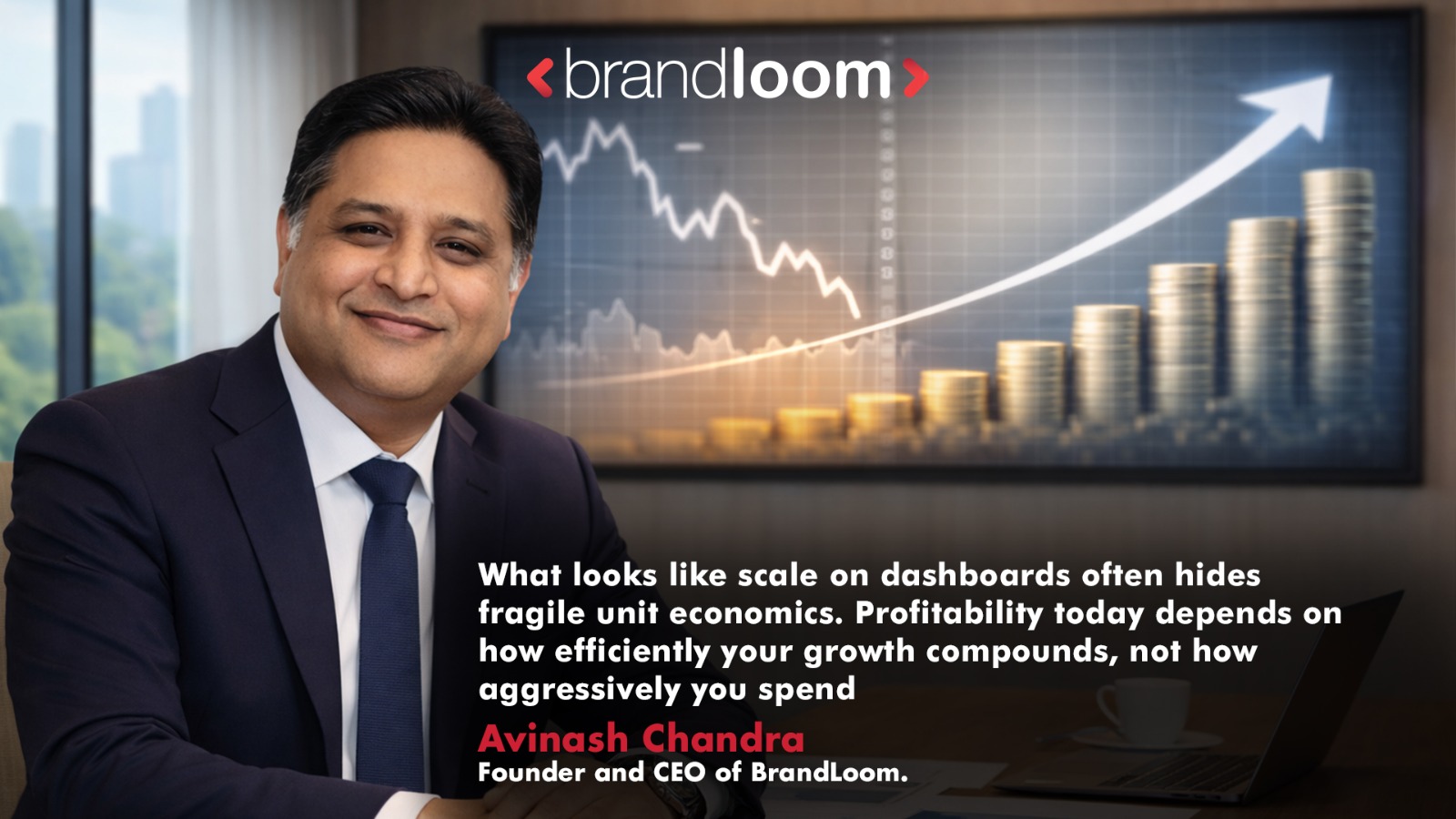
“The illusion of growth through paid channels is breaking,” said Avinash Chandra. “What looks like scale on dashboards often hides fragile unit economics. Profitability today depends on how efficiently your growth compounds, not how aggressively you spend.”
Key Findings from The 2026 Growth Efficiency Report
BrandLoom’s analysis surfaces three defining trends shaping the Indian D2C ecosystem:
1. Paid Spend Continues to Dominate, but With Declining Efficiency
A majority of D2C brands still allocate a disproportionate share of their budgets to performance marketing channels. While this drives short-term traffic and revenue spikes, the report finds diminishing returns as CAC rises and marginal gains shrink.
2. Brand Investment Remains Undervalued
Despite clear evidence that strong brand positioning improves conversion rates and lowers acquisition costs over time, most D2C brands under-allocate resources to brand-building initiatives. The result is over-dependence on paid channels without the support of recall, trust, or differentiation.
3. Retention Is the Most Underutilized Profit Lever
The report highlights retention as the most significant yet neglected driver of profitability. Brands with structured retention systems across CRM, lifecycle marketing, and customer experience consistently outperform in lifetime value (LTV), repeat purchase rates, and overall marketing efficiency.
Reframing Growth: From Budget Allocation to Profit Architecture
BrandLoom suggests that D2C brands need to move beyond channel-based budgeting and adopt a profit-first approach to growth design.
This begins with redefining how success is measured. Instead of focusing on top-line growth or ROAS in isolation, brands must evaluate marketing performance through contribution margins, customer lifetime value, and payback periods.
The next step is restructuring budget allocation. High-growth brands are increasingly distributing investments across three interconnected layers: acquisition, brand, and retention, ensuring that each function strengthens the other.
Equally critical is building systems that connect these layers. Without integration across data, customer journeys, and performance tracking, even well-funded strategies fail to deliver compounding results.
The Three Drivers of Growth Efficiency Identified by BrandLoom
1. Acquisition Efficiency Over Acquisition Volume
Winning brands are shifting focus from scaling traffic to improving the quality and cost-efficiency of acquisition. This includes sharper audience targeting, better creative alignment, and stronger pre-click brand signals.
2. Brand as a Conversion Multiplier
Instead of viewing a brand as a long-term expense, leading D2C companies are leveraging it to enhance performance. Strong brand recall and trust directly improve click-through rates, conversion rates, and overall CAC efficiency.
3. Retention as a Core Growth Engine
Retention is no longer a support function; it is central to profitability. Structured engagement strategies, personalized communication, and seamless customer experiences are enabling brands to unlock higher repeat purchases and sustained revenue streams.
A Strategic Wake-Up Call for D2C Leadership
BrandLoom emphasizes that improving growth efficiency requires leadership intervention, not just marketing optimization.
Organizations that treat marketing as a connected system rather than isolated activities are better positioned to control costs, improve margins, and scale sustainably.
“The next phase of D2C growth will not be defined by how much brands can spend, but by how intelligently they can allocate and optimize that spend,” Avinash added. “Efficiency is no longer a metric; it’s a strategy.”
About BrandLoom
BrandLoom is a strategic branding and digital consulting firm focused on helping businesses build scalable, profitable growth systems. The firm works with D2C, growth-stage, and enterprise brands to align marketing investments with revenue outcomes through integrated strategy, data-driven execution, and continuous optimization.
Learn more at: www.brandloom.com
